
What the label on your sweater is telling you
Turn a new sweater inside out and you will find a small tag near the side seam. Under the Federal Trade Commission's Care Labeling Rule, clothing sold in the US has to carry one, and it has to give regular care instructions for washing or drycleaning, drying, bleaching and ironing. The tag must stay readable for as long as the garment is useful.
The rule asks for one safe method, not every method. So a hand in a washtub does not mean the machine will ruin the sweater on the first try. It means hand washing is the way the maker can stand behind. If you want the knit to keep the shape it arrived in, that is the method to follow.
Reading the symbols on a sweater tag
Makers may print symbols instead of words, using the ASTM chart that the FTC publishes. Five shapes cover almost everything you will see on a knit.
- A washtub means wash. Dots inside show the warmest water allowed, and one dot is the coolest setting. A hand in the tub means hand wash.
- A triangle means bleach. With diagonal lines inside, only non-chlorine bleach is allowed.
- A square means dry. A circle inside it means the dryer, and a horizontal line inside it means dry flat.
- An iron means ironing, with dots for heat.
- A circle on its own means drycleaning.
An X over any of them means do not. A sweater tag that shows a hand in a washtub, a crossed-out triangle and a square with a line is telling you three things at once: wash by hand, no bleach, dry flat.
Why so many knits carry a hand wash label
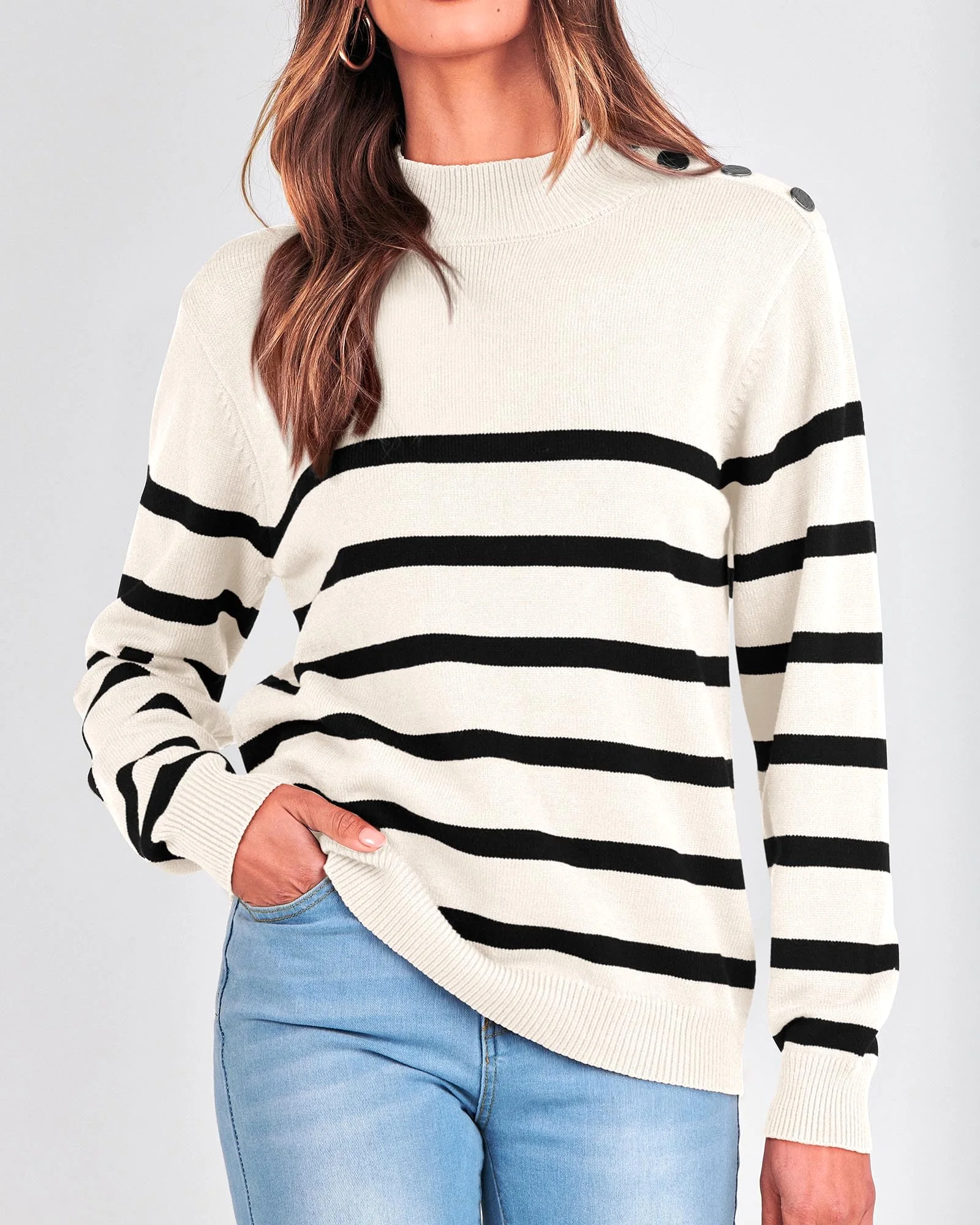
KIRUNDO Striped Turtleneck Sweater
Pullover sweater · 49.3% viscose, 27.7% polyester, 23% polyamide · 15 colors
From $24.69Read the fiber line next. The FTC requires fibers to be listed by generic name and by share of weight, largest first, so "74% acrylic, 22% polyester, 4% elastane" tells you what most of the yarn is. Most KIRUNDO sweaters and cardigans are acrylic, polyester or polyamide blends, some with viscose, and most of them carry the hand wash symbol.
A knit is built from loops, and a loose chunky knit has more room in each loop than a tight jersey. A long, warm, tumbling machine cycle moves those loops against each other far more than a few minutes in a basin does. Blends add a second variable, because the fibers in one yarn do not always react to heat in the same way. The label is the maker's answer to both.
Hand washing, step by step
Set aside ten minutes and a clean sink or basin.
- Fill the basin with cool water, then stir in a small amount of a mild detergent until it dissolves.
- Push the sweater under the water and let it soak for three to five minutes. Press it down and lift it a few times instead of rubbing.
- Squeeze the soapy water through the knit with flat hands. Never wring or twist it.
- Drain the basin, refill with cool water and press again. Repeat until no suds come out.
- Lift the sweater out in one bundle, supporting its weight, so the wet shoulders do not stretch.
- Lay it on a dry towel, roll the towel up with the sweater inside, and press on the roll to take out most of the water.
Chunky knits hold a lot of water and need a second towel. A fine knit is ready after one.
Drying a knit flat
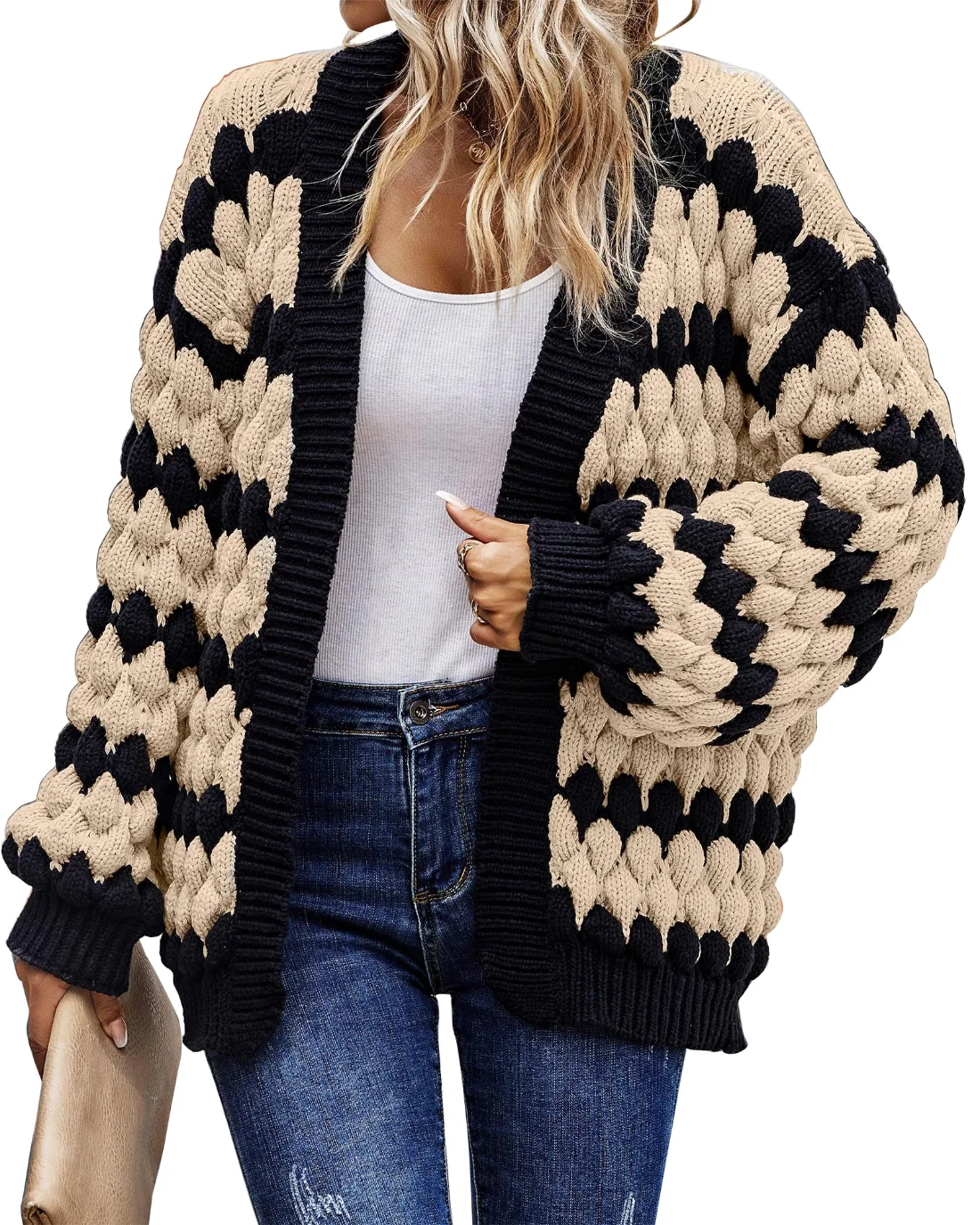
KIRUNDO Cable Knit Chunky Open Front Cardigan
Cardigan · 50% viscose, 30% polyester, 20% polyamide · 11 colors
From $38.99Wet yarn stretches easily. Hang a wet sweater and the water weight pulls the shoulders down and the body long, which is why a hand wash symbol so often sits next to a dry flat symbol on the same tag.
Unroll the sweater onto a fresh towel or a flat mesh rack. While it is still damp, push the shoulders back to their width, straighten the cuffs and the hem, and line the side seams up. Turn it over after a few hours so the underside dries too.
Once it is dry, fold it. A long fuzzy cardigan or a chunky open front cardigan is heavy enough to pull itself out of shape on a hanger over a season, and a shelf avoids that.
When the sweater starts to pill
Pills are small balls of loose fiber that form where the knit rubs: under the arms, at the cuffs, on the side where a bag sits. Most knits will pill somewhere over time, and a care routine slows it rather than stops it.
A battery fabric shaver takes pills off in a few passes. Hold the knit flat on a table and move the shaver lightly, without pressing into the yarn. A sweater comb does the same job more slowly. If a loop snags, do not cut it. Ease it back through to the inside with a blunt needle or a small crochet hook so it cannot catch again.
Unsure about a size, a fabric or a wash? Write to fittingroom@kirundo.org and the KIRUNDO team will answer.